

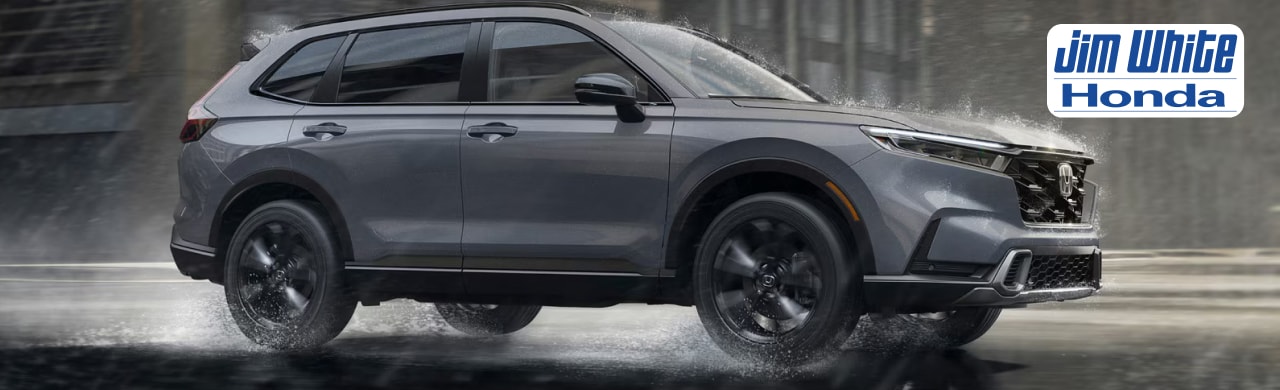
Choosing a fuel-efficient vehicle can make a meaningful difference when commuting between Maumee, Toledo, and surrounding Northwest Ohio communities. Drivers researching Honda fuel efficiency can choose from efficient gasoline vehicles and hybrid powertrains designed for different driving needs. The right model depends on your commute, passenger needs, cargo needs, budget, and whether you drive mostly on city streets or highways.
At Jim White Honda, shoppers can compare available Honda models and determine which combination of efficiency, comfort, technology, and practicality makes the most sense for everyday driving.
Which Honda Models Get the Best Gas Mileage?
Honda offers several vehicles worth comparing when fuel economy matters.
Exact EPA-estimated mileage varies by model year, trim, drivetrain, wheel configuration, and other equipment, so shoppers should verify the vehicle's specifications. However, several Honda nameplates regularly appeal to efficiency-focused drivers.
Honda Civic
The Civic is a natural starting point for commuters. Its compact size makes it convenient for daily travel and parking, while gasoline and hybrid configurations give shoppers different efficiency and performance options.
Honda Accord
Drivers who want additional passenger space may prefer the Accord. Available hybrid versions can be especially attractive for commuters balancing midsize-sedan comfort with reduced fuel consumption.
Honda CR-V
The CR-V provides crossover versatility for shoppers who need more cargo flexibility. Gasoline and available hybrid configurations let buyers compare conventional and electrified powertrains without sacrificing SUV practicality.
Honda HR-V
For drivers who want a smaller crossover, the HR-V can provide useful passenger and cargo space in a city-friendly package. Compare its fuel economy with your preferred sedan or larger SUV before deciding.
When researching Honda miles per gallon, always compare equivalent model years and configurations. Two versions of the same Honda can have different official fuel-economy estimates.
How Do Honda Hybrid and Gas Models Compare for Fuel Efficiency?
Choosing between a gasoline Honda and a hybrid depends on how you actually drive.
Conventional gasoline models can offer straightforward ownership and may have a lower initial purchase price than some comparable hybrid configurations.
Hybrid vehicles combine a gasoline engine with an electric drive system. This arrangement can provide particularly useful efficiency during driving that involves frequent slowing, stopping, and restarting.
That makes Honda hybrid fuel economy worth considering for commuters who regularly encounter traffic around Maumee and Toledo.
However, a hybrid isn't automatically the least expensive choice for every driver.
Compare:
- Vehicle purchase price
- EPA fuel-economy estimates
- Annual mileage
- Fuel costs
- Insurance
- Financing
- Maintenance
- How long you expect to own the vehicle
Someone driving substantial mileage each year may value fuel savings more than a driver with a very short commute.
A Honda gas mileage comparison should therefore include estimated ownership costs rather than MPG alone.
Which Fuel-Efficient Honda Is Best for Your Daily Commute?
The best choice depends on your commute.
If you mainly need efficient transportation for one or two people, a Civic may provide a useful balance of size, comfort, and economy.
If you spend considerable time on the road and want more passenger room, an Accord—particularly an available hybrid configuration—may be worth considering.
Families or drivers carrying more equipment may prefer a CR-V. A hybrid CR-V can combine crossover practicality with an efficiency-focused powertrain, depending on the model and configuration selected.
Think about your routine:
- How many miles do you drive each day?
- Is your commute mostly city or highway?
- How many passengers do you normally carry?
- Do you regularly transport large items?
- Do you need crossover cargo flexibility?
- What purchase price fits your budget?
Answering these questions can narrow your list of Honda commuter vehicles before you begin test-driving.
Why Your Real-World Honda MPG May Be Different
Official fuel-economy estimates are valuable comparison tools, but actual results vary.
Your driving habits can significantly affect consumption. Frequent hard acceleration, high speeds, extended idling, heavy cargo, and stop-and-go traffic can change how much fuel you use.
Other factors include:
- Tire pressure
- Outside temperature
- Climate-control use
- Vehicle maintenance
- Road conditions
- Trip length
- Passenger and cargo weight
Northwest Ohio's changing seasons can also influence real-world efficiency. Cold temperatures and winter driving conditions may result in different fuel consumption than mild-weather commuting.
For that reason, treat advertised Honda MPG figures as standardized estimates rather than guaranteed everyday results.
Gas Sedan or Hybrid SUV: Look Beyond MPG
The vehicle with the strongest fuel-economy number isn't automatically the best vehicle for your household.
A highly efficient sedan may be excellent for commuting but insufficient for a family that regularly carries passengers, sports equipment, luggage, or bulky cargo.
Likewise, buying more vehicles than you need may increase purchase and operating costs.
Consider efficiency alongside passenger room, cargo capacity, comfort, safety technology, purchase price, and insurance.
The most fuel-efficient Honda for your lifestyle is ultimately one that reduces fuel use while still handling your daily transportation needs comfortably.
How Can Maintenance Help Protect Fuel Economy?
Proper maintenance can support efficient operation.
Follow the maintenance guidance for your specific Honda and pay attention to tire pressure, fluid levels, filters, warning lights, and other service needs.
Tires are especially important. Incorrect pressure can affect efficiency, handling, tire wear, and overall driving performance.
If you notice a sudden change in fuel consumption, don't automatically assume it is normal. Driving conditions may be responsible, but mechanical or maintenance issues can also affect efficiency.
Frequently Asked Questions
Which Honda is best for gas mileage?
The answer varies by model year and configuration. Honda hybrid models such as certain Civic, Accord, and CR-V versions may be worth comparing when fuel economy is a priority.
Are Honda hybrids better for city commuting?
Hybrids can be particularly efficient in stop-and-go driving, although real-world results depend on the vehicle and driving conditions.
Does a Honda SUV use more fuel than a sedan?
Often, larger vehicles require more energy to move, but powertrain and configuration matter. Compare official estimates for the exact models you're considering.
Does cold Ohio weather affect fuel economy?
It can. Temperature, winter fuel formulations, road conditions, tire pressure, and cabin heating demands may contribute to changes in real-world efficiency.
Should I choose a Honda based only on MPG?
No. Consider purchase price, passenger and cargo needs, insurance, comfort, features, maintenance, and total ownership costs alongside fuel economy.
Find a Fuel-Efficient Honda Near Maumee and Toledo
Strong Honda fuel efficiency starts with choosing a vehicle that matches your actual commute. Compare gasoline and hybrid options, review official fuel-economy estimates for the exact configuration, and test-drive your preferred models.
Visit Jim White Honda in Maumee near Toledo to explore available vehicles.
